ChatGPT Sponsored Ads: What OpenAI Ads Mean for Marketers in 2026
Mitali Pawar
Author
6 February 2026
Published
7 min
Read time
245
Views
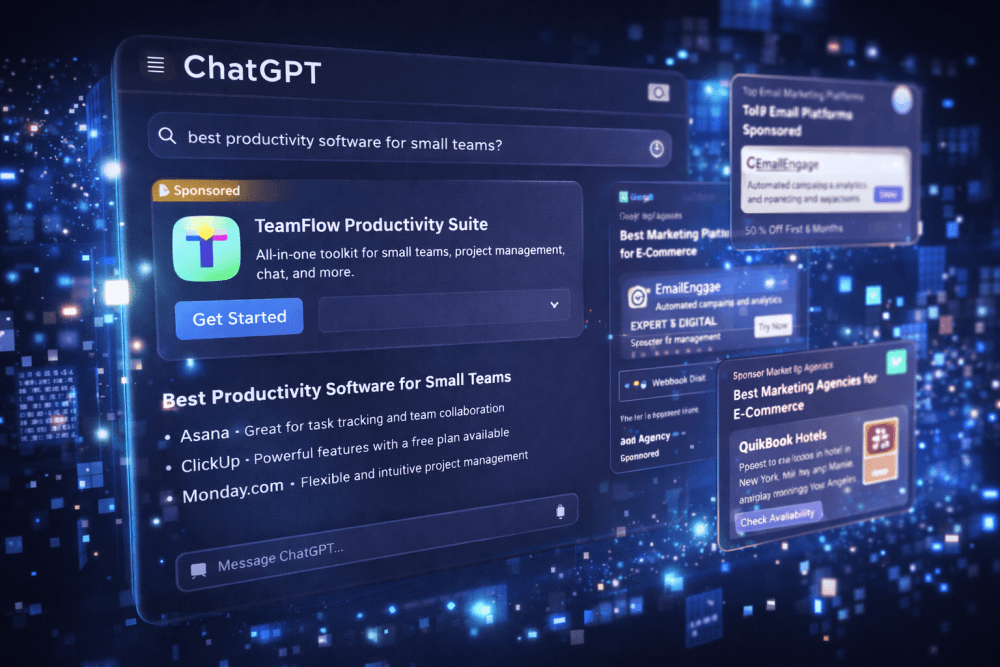
ChatGPT sponsored ads represent a structural shift in digital advertising, not just another monetization update. In early 2026, OpenAI confirmed the introduction of ads within ChatGPT, initially testi...
ChatGPT sponsored ads represent a structural shift in digital advertising, not just another monetization update. In early 2026, OpenAI confirmed the introduction of ads within ChatGPT, initially testing them on Free and Go tiers in the US, with global expansion expected. This move signals OpenAI’s transition toward a sustainable, ad-supported model beyond subscriptions—while maintaining a strong focus on user trust, privacy, and intent-based relevance.
What makes this development significant is where ads are being introduced. Unlike search engines or social platforms that added ads after scaling, ChatGPT is embedding advertising directly into a conversational, intent-first interface where users actively seek answers, recommendations, and decision support. This creates a new advertising surface positioned between search intent and human consultation.
From a market and advertising perspective, this shift is being driven by several converging trends:
Slowing growth in traditional search advertising
Declining user trust in social media ads
Rapid adoption of AI tools for research and discovery
Advertiser demand for high-intent, low-noise environments
Industry estimates indicate that ChatGPT could generate up to $25 billion in annual ad revenue by 2030, potentially challenging established players like Google and Meta. This article provides a concise, data-driven overview of ChatGPT sponsored ads—covering platform mechanics, emerging trends, risks, and practical guidance for advertisers evaluating this new channel..
Market Context: AI Advertising Landscape in 2026
The AI Adoption Boom
ChatGPT reaches ~800 million weekly active users, with only a small percentage as paid subscribers — highlighting massive free user demand.
Analyst predictions estimate up to 25% of global search queries could shift to AI chat interfaces by year-end 2026, transforming discovery and purchase intent signals for advertisers.
Why Now? Economic Forces
AI model compute costs continue to spiral upward, prompting OpenAI to explore advertising as a necessary revenue diversification strategy. Leaders within the company acknowledge that subscription revenue alone cannot subsidize long-term infrastructure and model development costs.
Industry estimates suggest OpenAI plans to expand beyond subscription revenue toward a multi-billion-dollar ad business by 2030.
What Are ChatGPT Sponsored Ads?
ChatGPT sponsored ads are contextually relevant, AI-selected promotional responses displayed inside ChatGPT conversations. Unlike traditional banner or keyword ads, these placements are intent-driven, meaning ads appear only when they align with the user’s conversational query.
Instead of interrupting users, ChatGPT ads are designed to blend into the informational flow, clearly labeled as sponsored while maintaining usefulness and relevance.
Key Characteristics of ChatGPT Sponsored Ads
No intrusive pop-ups or banners
Ads triggered by conversational intent, not keyword bidding alone
Clear disclosure and labeling for transparency
AI-moderated placements to prevent manipulation
Designed for trust-first user experience
This makes OpenAI advertising fundamentally different from existing ad ecosystems.
ChatGPT Ads Platform: How It Works at a Technical Level
The ChatGPT ads platform is built on OpenAI’s core AI inference and safety systems. Ads are not shown randomly; they are selected based on semantic relevance, conversation flow, and compliance checks.
Core Components of the Platform
Intent Detection Layer
Determines whether a user query has commercial intent.Contextual Matching Engine
Matches advertisers with queries based on topic relevance, not personal profiling.Ads Integrity & Safety System
Filters misleading, harmful, or policy-violating ads.ChatGPT Ads Manager
Enables advertisers to control campaigns, targeting logic, and analytics.
OpenAI has publicly stated that user data is not sold, and ads are not based on invasive behavioral tracking—positioning this as a privacy-first ad platform.
OpenAI Advertising: Why the Company Entered the Ads Business
The Strategic Shift
OpenAI’s move into advertising answers a critical question:
How do you sustainably fund large-scale AI access without compromising trust?
According to OpenAI leadership, advertising helps:
Expand free and low-cost access to ChatGPT globally
Reduce dependency on subscriptions alone
Compete with ad-funded ecosystems like Google and Meta
Support long-term AI infrastructure investments
As reported by global media outlets, OpenAI has also formed a dedicated Ads Integrity Team, reportedly investing millions annually to ensure transparency and safety in this new monetization layer.
When Were ChatGPT Sponsored Ads Announced?
The official confirmation came in January 2026, following months of speculation. OpenAI clarified its advertising philosophy through a public policy update and supporting documentation.
What’s the Current Status of ChatGPT Ads?
Ads are not yet widely live but testing is beginning with:
Logged-in adults on the Free tier
Users on the ChatGPT Go plan (lower-cost subscription)
Plus, Pro, Business, Enterprise, and Education accounts will remain ad-free.
Ads are blocked in contexts involving sensitive content such as health, mental health, or politics, and users under 18 will not be shown ads during tests.
Emerging Data & Pricing Trends
Early reports indicate that OpenAI intends to price ChatGPT ads at approximately $60 per 1,000 impressions (CPM) — about three times higher than typical Meta platform rates. However, initial analytics will be limited to high-level impressions and clicks, with no granular conversion or purchase data shared to protect privacy.
This suggests a premium, high-intent visibility environment — prioritizing brand exposure and quality engagement over traditional performance tracking.
Advertising Revenue Outlook
Industry forecasts paint a bullish long-term picture for ChatGPT ads:
*Figures based on multiple industry projections and market commentary.
Shift from Traditional Search
Analysts suggest that as AI chat platforms become primary discovery tools, ad dollars may shift from search engines toward AI-first contexts, pressuring legacy ad giants to adapt.
Why Are ChatGPT Sponsored Ads Getting So Much Attention?
1. Unmatched User Intent
Users ask ChatGPT highly specific, problem-oriented questions—making intent signals far stronger than traditional search.
2. Declining Trust in Traditional Ads
Audiences increasingly ignore banners and sponsored search results. Conversational ads feel more helpful when done correctly.
3. AI-First Discovery Behavior
Younger users are using AI tools instead of search engines, forcing advertisers to follow attention.
4. Brand Safety Promise
OpenAI’s strict ad moderation framework appeals to enterprise advertisers concerned about placement risks.
ChatGPT Advertising Campaign's: What Do They Look Like?
ChatGPT advertising campaigns are structured differently from search or social campaigns.
Campaign Elements
Conversational intent categories
Topic and use-case alignment
Approved ad responses (AI-assisted)
Safety and accuracy checks
Performance metrics based on engagement quality
Rather than bidding on keywords, advertisers bid on intent clusters.
How to Buy Ads on ChatGPT?
Step-by-Step Overview
Apply for access via OpenAI advertising partners
Get verified as a business advertiser
Define campaign objectives (education, leads, trials)
Configure targeting logic
Launch pilot campaigns
Monitor and optimize through analytics
Currently, how to buy ads on ChatGPT is limited to approved advertisers, but wider access is expected.
ChatGPT Ads Manager: Tools, Controls, and Analytics
The ChatGPT ads Manager is a centralized dashboard that allows advertisers to:
Create and manage campaigns
Define contextual targeting
Set budgets and limits
Review AI-generated ad suggestions
Access performance analytics
Key Metrics Available
Conversation engagement rate
Ad relevance score
Follow-up interaction rate
User satisfaction signals
Traditional metrics like CTR are supplemented by intent-completion indicators.
How to Sign Up for ChatGPT Ads?
Current Process
Invitation-only or application-based
Business verification required
Compliance and content review
Ads policy acknowledgment
OpenAI has stated that self-serve onboarding will roll out gradually.
ChatGPT Ads Pricing: What Do We Know So Far?
While official Chatgpt ads pricing has not been fully disclosed, early reports suggest:
Cost-per-intent (CPI) model
Premium pricing for high-value verticals
Daily and monthly caps
Performance-based optimization
Compared to Google Ads, early adopters report higher quality engagement but lower scale—at least initially.
OpenAI Ads vs Google Ads: Can They Coexist?
Rather than replacing Google Ads, OpenAI ads are positioned as a complementary channel.
What User Experience Changes Are Coming to ChatGPT?
Expected UX Changes
Clear “Sponsored” labels
Limited frequency of ads
High relevance filtering
No ad overload
Feedback controls for users
OpenAI has emphasized that ads will never override factual accuracy.
What Are the Side Effects and Risks?
Potential Concerns
Commercial bias in AI responses
Over-monetization risk
Brand trust erosion if poorly executed
Regulatory scrutiny
OpenAI’s Countermeasures
Strict separation between ads and core AI responses
Independent review systems
Ads integrity teams
User feedback loops
Will ChatGPT Sponsored Ads Actually Work?
Early Indicators
Higher engagement quality
Longer interaction time
Strong brand recall
Better educational conversion
Trend Graphs & Predictions
(NOTE: Actual visuals cannot be embedded here, but below are recommended graphical inclusions for publication.)
Trend 1: AI Query Share Growth

Estimated 2024–2026:
Google Search → AI Chat Share Rising (Projected)
2024: 5 %
2025: 15 %
2026: 25 %
Trend 2: Ad Revenue Projections (2026–2030)

(Unofficial community-sourced share projections) ChatGPT: ~68 % Gemini: ~18 % Others (Claude, DeepSeek, Copilot): ~14 % While speculative, these figures highlight competitive pressure influencing monetization strategies. The answer lies in execution. If OpenAI maintains transparency, relevance, and user control, ChatGPT sponsored ads could redefine digital advertising. If not, users will push back. At VyomEdge Solutions, we help businesses: Prepare AI-first ad strategies Align conversational intent with marketing funnels Test emerging ad platforms early Optimize content for AI discovery Maintain compliance and brand safety AI advertising is not about replacing channels—it’s about expanding intelligent reach. ChatGPT sponsored ads mark a defining moment in AI commercialization. Whether it becomes a trusted channel or a cautionary tale will depend on how responsibly it is deployed.Trend 3: AI Chatbot Market Share Shift

Is This the Future of Advertising or a Risky Experiment?
How VyomEdge Solutions Helps Brands Prepare
Final Thoughts
Frequently Asked Questions
Are ChatGPT sponsored ads available in India yet?▼
Can small businesses use ChatGPT ads?▼
Do ChatGPT ads use personal user data?▼
Can ads influence ChatGPT’s factual responses?▼
Are ChatGPT ads suitable for B2B marketing?▼
Will ChatGPT ads replace Google Ads?▼
Can agencies manage ChatGPT ads for clients?▼
Written by Mitali Pawar
Sharing insights and strategies to help businesses grow their digital presence.
Get in touch →Ready to Grow Your Business?
Let's discuss how we can help you achieve similar results.
Book a Free Strategy Call →